
Flying between European cities is faster in theory. In practice, you spend 90 minutes getting to the airport, 90 minutes in security and boarding, 90 minutes flying, then 60 minutes reaching the city centre from wherever the budget airline lands you. That's 6 hours door-to-door between Paris and Amsterdam — the same as the Thalys (now Eurostar) train, which drops you in the centre of both cities and lets you watch the Dutch polders unfold outside the window.
This itinerary covers the classic grand tour of Europe's most compelling cities by rail, in three weeks. It's designed to be genuinely do-able without burning out, with 2–4 nights per city and logical geography — no backtracking, no wasted travel days.
The Route at a Glance
Compare fares and book point-to-point train tickets for every route on this itinerary. Advance booking gets the best prices.
Interrail vs. Point-to-Point: Which Makes Sense?
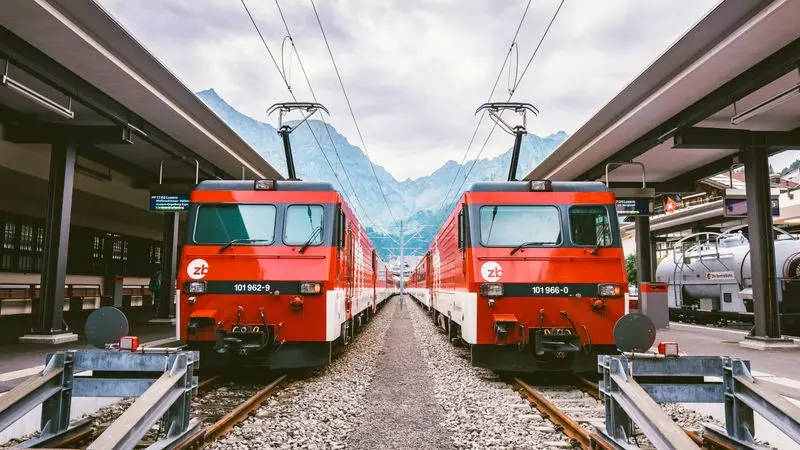
This is the most common question about European rail travel, and the answer depends entirely on your age and how many journeys you're making.
Interrail Global Pass (for EU residents)
The 21-day continuous pass costs approximately €490 (adult, 2nd class) in 2026. It covers unlimited travel on nearly all European rail networks included in the scheme. For non-EU residents, the equivalent is the Eurail Global Pass at similar pricing.
When the pass wins: If you're making 7+ journeys and include at least one expensive high-speed route (Paris–Amsterdam, Berlin–Prague), the maths usually works in your favour. Under 28? The youth pass is 25% cheaper — the case becomes even clearer.
When point-to-point wins: If you're booking 6–12 weeks ahead on specific dates, individual tickets on platforms like Trainline, SNCF Connect, or Deutsche Bahn's own site can significantly undercut the pass cost. A Paris–Amsterdam advance fare can be as low as €25; London–Paris from £35. If you book every leg at advance rates, you can come in well below the pass price.
| Leg | Interrail (pass reservation fee) | Point-to-point advance |
|---|---|---|
| London → Paris (Eurostar) | €35 reservation | £35–80 |
| Paris → Amsterdam | €13 reservation | €25–65 |
| Amsterdam → Berlin | €13 reservation | €29–79 |
| Berlin → Prague | €6 reservation | €19–49 |
| Prague → Vienna | €3 reservation | €19–45 |
| Vienna → Venice (Nightjet) | €10 reservation + €25–45 couchette | €39–89 |
| Venice → Barcelona | €35 reservation | €55–120 |
The honest answer: Run the numbers on your actual dates 3–4 months out. Use the Interrail pass calculator at interrail.eu and compare against Trainline. The pass wins on spontaneity; point-to-point wins on certainty and advance planning.
Night Trains: The Underrated Game-Changer
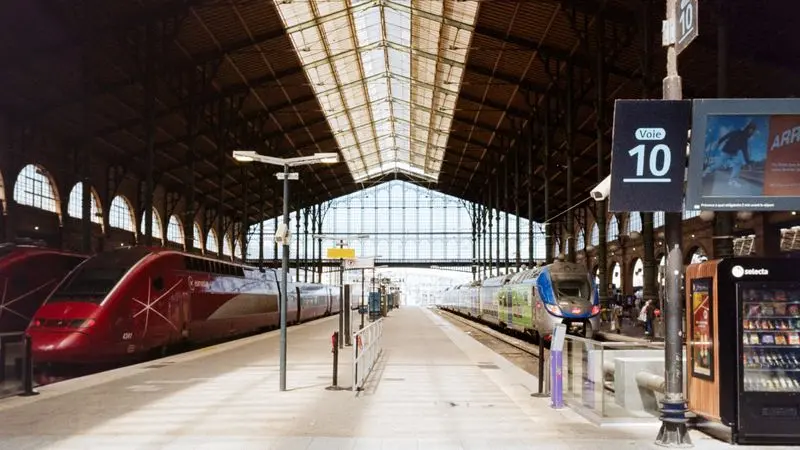
Night trains eliminate one of budget travel's biggest costs: accommodation. A €45–80 couchette berth gives you a bed, a night's sleep, and transport. That's competitive with a hostel bed plus a daytime train fare — and you arrive ready to start the day instead of losing half of it to travel.
- Vienna → Venice Nightjet (ÖBB): Departs ~7pm, arrives Venice 9am. Book direct at nightjet.com. Couchette €25–45 supplement on Interrail, or full ticket €59–120.
- Paris → Berlin (Intercités de Nuit): SNCF operates this route — a solid alternative if you want to compress the Paris–Berlin leg into a single overnight rather than spending a travel day. Departs ~9pm Paris Est, arrives Berlin ~8am.
- Amsterdam → Berlin Nightjet: Launched in 2024, this route now operates 4 nights per week. Departs Amsterdam ~8pm, arrives Berlin ~7am.
Book night trains as early as possible — 180 days in advance for ÖBB Nightjet. The cheapest couchette berths sell out first. Always book the specific berth (couchette or sleeper), not just the seat — overnight in a seat is miserable on a 9-hour train.
Search and compare night train fares across Europe. The Vienna to Venice Nightjet is one of the continent's best overnight journeys.
City-by-City Highlights
London (2 nights)
If you're flying into London as a non-EU visitor, give yourself a full two days. The Eurostar terminal at St Pancras is worth an hour itself — the Victorian Gothic station is extraordinary, and the Champagne Bar on platform level is a civilised place to wait for departure. Must-sees before boarding: the British Museum (free), Columbia Road Flower Market (Sunday mornings only), and the view from the South Bank at dusk.
Paris (3 nights)
Three nights is the minimum to avoid feeling rushed. Day one: left bank walking circuit (Latin Quarter, Sainte-Chapelle, Île de la Cité). Day two: Marais, Centre Pompidou, lunch in the Jewish quarter. Day three: Montmartre in the morning, afternoon at the d'Orsay or Rodin museum. Every evening: picnic supplies from a boulangerie and a Seine-side bottle of wine. Budget €12–20/day for food if you shop like a local.
Amsterdam (2 nights)
Two nights is enough for the highlights if you're efficient. Rent a bike (€10–15/day) — it's the correct way to see Amsterdam. The Rijksmuseum requires half a day; book timed entry ahead. The Jordaan neighbourhood's brown cafés and canal-house architecture are best explored on foot in the morning before the tourist crowds. Day trip option: Haarlem by train (20 minutes, €8 return) — a smaller, quieter version of Amsterdam with better Frans Hals paintings.
Berlin (3 nights)
Berlin rewards slow exploration. Day one: the East — DDR Museum, East Side Gallery, Karl-Marx-Allee's Soviet-era boulevard. Day two: Mitte and Museum Island (book the Pergamon Museum weeks ahead — it's Germany's most visited museum). Day three: Kreuzberg and Neukölln for street art, the Turkish market, and the best döner kebab you'll eat in your life. Berlin's nightlife is legendary but completely optional — the city is equally compelling during the day.
Prague (3 nights)
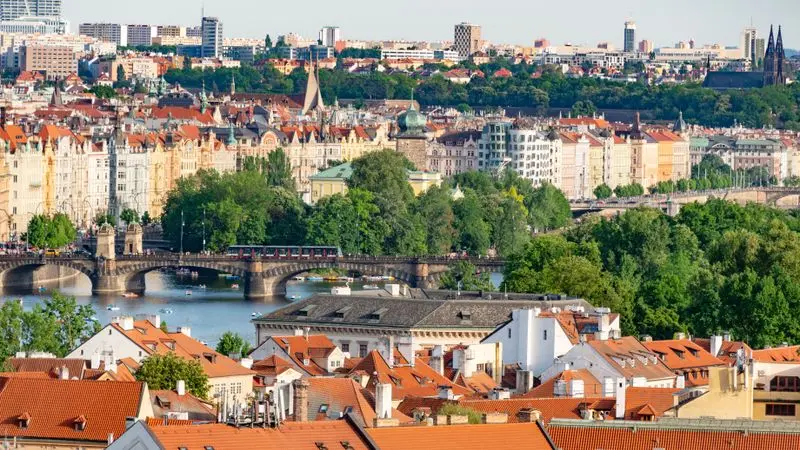
Prague has two modes: tourist-centre chaos and genuinely atmospheric medieval city. The Old Town Square, Charles Bridge, and Prague Castle are crowded and worth it — go at 7am before the tour groups. Beyond those three, the city quietens: Vinohrady and Žižkov neighbourhoods have excellent local restaurants and bars where prices are pre-2015. The National Gallery at Veletržní palác has the best Czech 20th-century art collection in the world and is almost always empty.
Vienna (2 nights)
Vienna is dense with world-class museums but notoriously expensive to eat in restaurant form. The solution: the Naschmarkt for lunch (giant covered and open-air market, excellent sausages, falafel, and Käsekrainer for €3–5), and self-catering for dinner. The Kunsthistorisches Museum, the Belvedere Palace gardens, and a Heuriger (wine tavern) evening in Grinzing are the three experiences that define Vienna correctly. Book the Nightjet to Venice the night you arrive.
Venice (2 nights)
Venice is a tourist trap and the most beautiful city on earth simultaneously. The trap is the restaurants and gondola rides around San Marco. The beauty is everywhere else. Stay in Cannaregio or Dorsoduro, eat at bacari (cicchetti bars, €1–2 per piece for Venetian bar snacks), and walk away from the crowds systematically. The Accademia museum, the Frari church (two Titian masterpieces), and the view from the San Giorgio Maggiore campanile (€8, worth it) are your anchors. Buy your vaporetto day pass on arrival.
Barcelona (3 nights)
End the trip in style. Barcelona has the best food of any city on this itinerary — the Boqueria market for breakfast, tapas in the Born neighbourhood for lunch, and a proper Catalan dinner in Gràcia for under €25. Sagrada Família is unmissable but book weeks ahead; the interior (finally complete with its towers) is worth the €30 entry. The Picasso Museum, Park Güell (book timed entry), and the Gothic Quarter at night round out three excellent days.
Skip-the-line museum tickets, walking tours, food tours, and day trips across every city on this route. Book ahead for summer to guarantee availability.
Browse European Tours & Activities →Costs Summary: 21-Day Trip
- Interrail Global Pass (21 days, adult): ~€490
- Reservation fees (all legs on this route): €110–160
- Accommodation (compare hotels, avg €40/night): €840
- Food (€25–35/day self-catering + one restaurant meal): €525–735
- Museum entries and activities (€15–25/day): €315–525
- Local transport in cities (€5–10/day): €105–210
- Total estimated range: €2,385–2,960
That's $2,600–3,200 for three weeks covering eight cities across eight countries. Flying this same route would add €400–800 in flights but save €490 on the rail pass — roughly break-even on transport costs, with the added cost of airport transfers and time. The train wins on experience. The flight wins if your time is compressed to 10 days or fewer.
- 6 months out: Book Nightjet Vienna → Venice couchettes (they sell out)
- 3–4 months out: Book Eurostar London → Paris for best fares
- 2–3 months out: Book Thalys (now Eurostar)/Eurostar Paris → Amsterdam, Frecciarossa Venice → Milan
- 6–8 weeks out: Book Rijksmuseum (Amsterdam), Pergamon Museum (Berlin), Sagrada Família (Barcelona)
- On arrival: Vaporetto day passes in Venice, bike rental in Amsterdam
Get the best deals on hotels, train tickets, and activities across all eight cities on this itinerary.
Want a custom European rail itinerary?
Tell Tripva your travel dates, starting city, budget, and must-see destinations — and we'll build a complete day-by-day rail itinerary with transport times, accommodation suggestions, and booking priorities.
Plan Your Rail Trip ✦Book train tickets at Trainline or direct at Interrail.eu